In the spring of 2012, I was hanging out with some of my friends after school. We just pushed the basketball hoop that we had out to the curb and was ready to play a game of 21. My friend Jason (named changed to protect his identity) came up to me and showed me a picture of Skittles and Arizona Iced Tea from his Instagram page.
“What is this?” I asked. Jason shook his head and said that it was a tribute to a kid that was shot a few months ago. I shrugged it off. I assumed that it was just another kid in our neighborhood. I heard about a gang shooting that happened around the same time. Little did I know that the story of Trayvon Martin would become national news.
We know the story. 17-year-old Trayvon Martin was walking from a store late one night when he got into an altercation with a neighborhood watchman, George Zimmerman. A scuffle broke out, resulting in the tragic death of this young man. Now, I’m not here to analyze this case. It’s been done several times over the last several years. I’m writing about the events that occurred after.
The nation was pulled in by this story about a seemingly innocent young adult being gunned down by a “white-looking man.” President Obama said that if he had a son, he would look a lot like Trayvon. News channels plastered Trayvon’s face every night, celebrities like Dwayne Wade donned a hoodie for an Ebony magazine cover photo. For a brief moment, Skittles and Iced tea became symbols of injustice.
The narrative of a black man wearing a hoodie vs. a white man wearing a hoodie was just too good to ignore. People started to make comparisons between Martin and Facebook’s founder Mark Zuckerberg (who at that time was known for wearing casual wear, including hoodies to his office.) Change.org got over 2 million signatures in an attempt to charge Zimmerman. The saga completely overshadowed America’s other woes, including a still-struggling economy. Racial injustice became a significant talking point for the 2012 election.
Democrats quickly took the side of Trayvon Martin, and some Republicans quickly took the side of Zimmerman. Many of these people didn’t have a lot to go on, but the thought of the other side taking a side prompted them to take the complete opposite approach.
When the ruling came down on July 13, 2013, Zimmerman was found not guilty, the outrage was heard throughout the nation. NFL star wideout, Roddy White even tweeted out that the members of the jury should kill themselves for allowing a murderer free. While the world was focused on the high-profile individual’s opinion, two women came together to form everyone’s “favorite” civil rights group. Black Lives Matter.
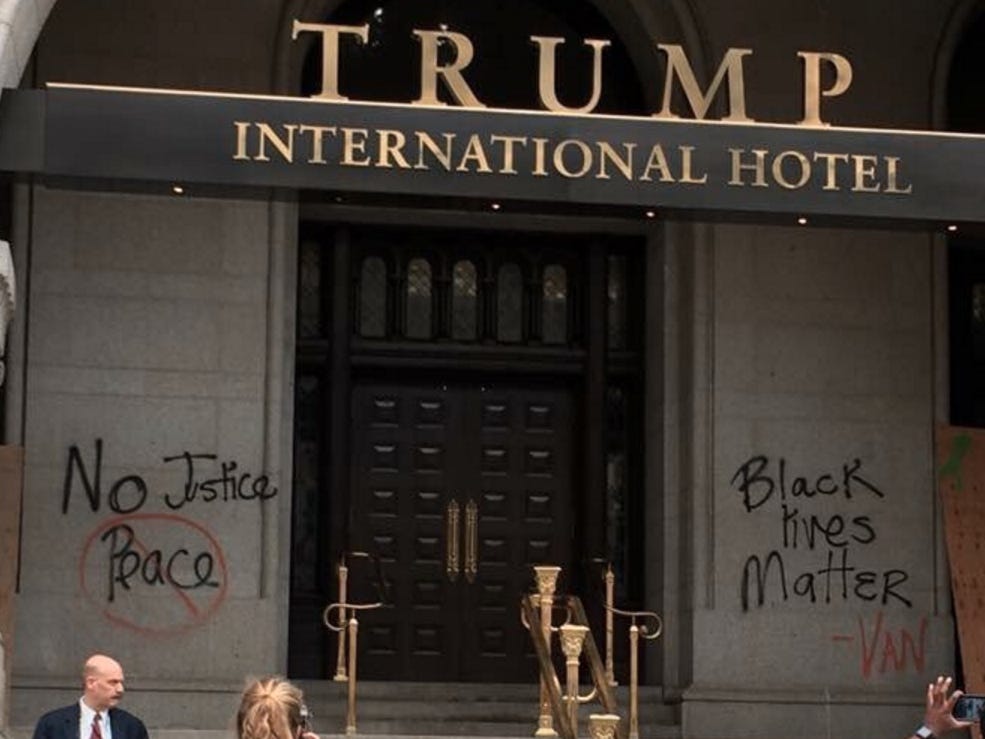
The movement made its first big break in 2014, following the shooting of Michael Brown. The classic hands up, don’t shoot mantra, was an homage to Brown’s alleged compliance. Original peaceful protests erupted into violent riots that destroyed a community. This would become a staple of BLM’s antics. Officer Wilson, the policeman involved in the shooting, was not charged.
Accusations of white privilege began circulating surrounding the case. Pundits and politicians alike began criticizing the Ferguson police department because a majority white police force was policing a majority-black area. Had there been a more diverse force, incidents like this might not have happened.
Fast forward to the spring of 2015, another case of police violence made the news. Freddie Gray was taken into custody by the Baltimore police department. A few days later, he died from injuries allegedly sustained from his ride in the back of a police van. Riots broke out, and chaos ensued. People were calling the police systemically racist. The only problem with that was Baltimore PD, and half the officers involved with this case were black. This, of course, didn’t stop the media from blasting their divisive rhetoric anyways.
I remember watching the riots on television and wondering how would destroying black neighborhoods help anything. I kept my mouth shut because speaking out on the movement was seen as being anti-black, a sentiment that is still held today. 2016 brought the discussion to higher levels when Philando Castile and Alton Sterling were killed. The accusations of systemic racism were on full effect when the attacks became aimed at then-presidential candidate Donald Trump. The night of the 2016 election was wrought with anxiety. Many issues of this country were hanging in the balance. Trump won.
Marches lasted for a few days following election night. Women marches were set for the spring of the following year. Resistance became the rallying cry of the left. The only issue was that one particular group was missing from the anti-Trump train in 2017: Black Lives Matter. There was radio silence from the group in 2017, 2018, 2019.
It’s an election year; another chance for the Democrats to oust President Trump and reclaim the White House. After a few years of silence, BLM made their miraculous return. The first major story was that of Ahmaud Arbery. The story broke out in March, even though the incident happened earlier in the year. The victim was black, and he was “gunned down” by two white guys (the left’s favorite villain). It was days after the Arbery story broke when we learned of Breonna Taylor. A woman who was allegedly shot in her sleep by the cops.
After a few weeks, we saw the horrible video of George Floyd. A raw, uncensored video of a white police officer kneeling on a black man’s neck was the final straw. Riots ensued. Chaos reigned. Anarchists took over entire city blocks. Murals were painted for George Floyd, and athletes everywhere spoke highly of a former felon that was high on meth. Floyd became a rallying cry.
When a drunk man driving a vehicle was killed in an altercation with police in Atlanta, communities began being scorched. The NBA postponed games in acknowledgment to Jacob Blake, a child predator, who refused police orders and began reaching for an item in his van.
BLM has used these incidents as tools for their agenda. BLM calls itself a decentralized group with no actual leader. Yet, this same group has raised millions of dollars from donations worldwide. Where is that money going? No one seems to have an answer to the top of their head.
Business Insider did some digging and found that when you donate to BLM, the money goes to ActBlue, a Democrat fundraiser organization. It then goes to Thousand Currents, a non-profit charity organization, who want to establish “alternative economics.” If you dig a little deeper, you will find that Susan Rosenberg, a former member of the communist domestic terrorist group Weather Underground, was on the board for a brief time.
The link between BLM and communism isn’t new. The founders of the group, Patrisse Cullors, Alicia Garza, and Opal Tometi claimed to be “trained Marxists. The website until recently stated that the goal of BLM was to destroy the nuclear family. If you’re wondering how destroying families help black lives, you’re not alone.
You’re also not alone if you realize that the increasing calls of reparations, defunding the police, and dismantling America have nothing to do with improving black lives. If you’re not convinced, look at the overwhelmingly amount of white people burning down neighborhoods they claim to care about.
Expressing these concerns to people who would listen is complicated and sometimes detrimental to your image. White people are already familiar with the constant accusations of racism, and black people might get ostracized from our community. Hell, even writing this article might get me to call any various numbers of slurs.
So, what do we do? I wish I had a simple answer, but the unfortunate truth is that there is not much anyone can do. My advice is to remain vigilant and keep an open dialogue with the individuals who believe BLM is a godsend. Doing this in person is critical. Any conversation with a stranger on the internet will be met with the run of the mill insults.
We must continue to acknowledge the hypocrisy from the left and be willing to back up our stances with facts. And when they rain “hellfire” upon us with their accusations, ask them their stance on why a decentralized group has raised millions of dollars and have yet to disclose where the money is being sent to. Better yet, ask them why they think millionaire athletes taking a knee will solve police brutality.
Whatever your solution is when opening dialogue, make sure you remain civil and respectful. We cannot win playing dirty cheap tricks. Thank you for reading.
 Douglass Times